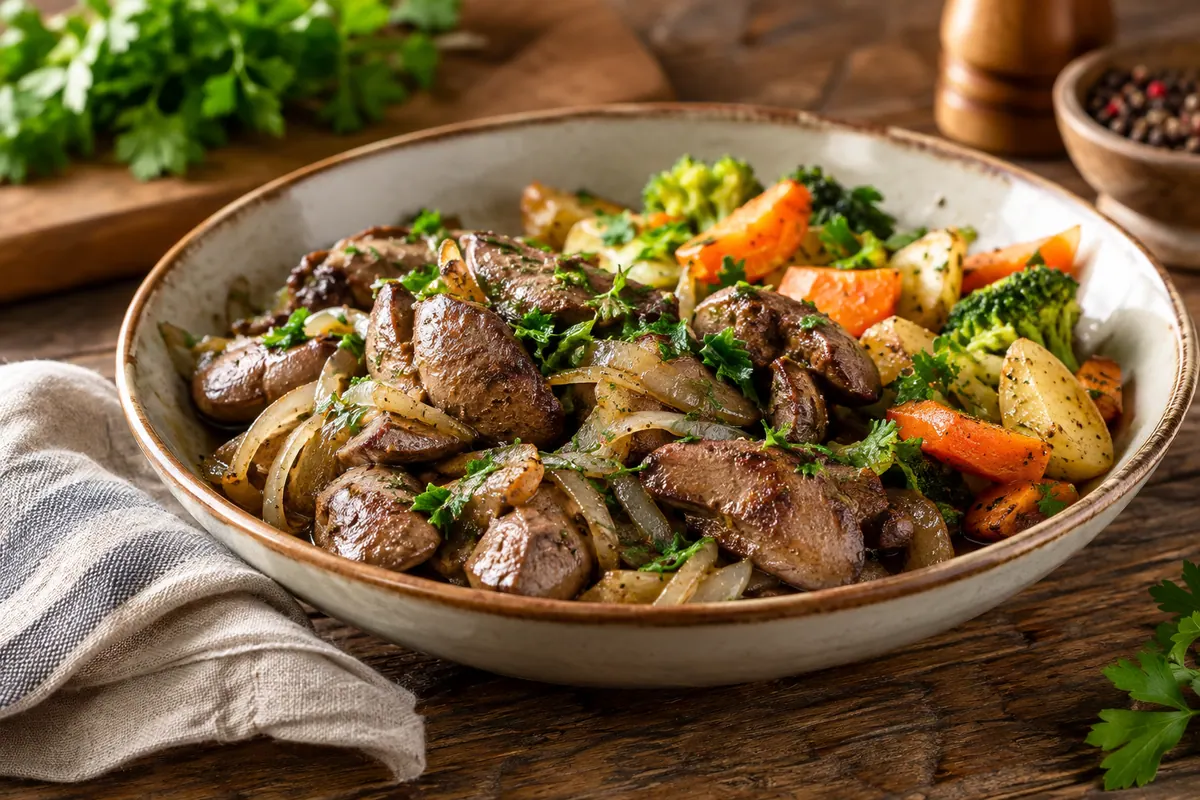
Buying offal starts with a conversation about the cut, not a claim that every organ is interchangeable. Ask what animal it comes from, whether it has been prepared and how it should be stored. A small amount for one planned dish is often easier to manage than a bulk purchase. Before shopping, check that you have room for safe chilled storage and know when the food will be cooked.
Buy for a recipe, not just a bargain
A low price is only useful if the cut suits a dish you can make. Ask whether trimming or other preparation is needed and whether the quantity will provide the servings you intend. The recipe should name the same cut. If an unfamiliar item is suggested as a substitute, ask how preparation and cooking will change. Keep allergy and dietary suitability in mind when a prepared product includes other ingredients. Liver pâté, for example, is a product with more to consider than plain liver alone.
Keep safe handling visible
Follow the seller’s and pack’s instructions, including use-by dates and storage. Keep raw ingredients separate from ready-to-eat foods and avoid transferring contamination through knives, boards or hands. Follow reliable cooking guidance for your chosen preparation rather than relying on appearance alone. Plan leftovers before cooking and cool, store and reheat them safely. A traditional recipe is not a reason to ignore current food-safety advice, especially when serving people who may be more vulnerable to foodborne illness.
A practical example
A prepared small pack for a planned dinner may be more useful than several unprepared cuts bought cheaply. Ask the butcher what still needs doing and decide whether the preparation fits your evening. Choose a different meal if the available cut does not match the recipe or your storage capacity.
Try it this week
Before buying, write the cooking day and recipe beside the cut on your shopping list. Check you have the equipment and time it requires. Bring the ingredient into appropriate storage promptly and retain the label information. If your schedule changes, follow suitable storage guidance rather than assuming an extra day is harmless.
- Does this cut match the recipe?
- Can I store and prepare it safely?
- Have I retained use-by and handling instructions?
Keep the wider picture in view
Offal is optional, and choosing not to eat it does not mean a varied diet is missing a compulsory superfood. People can obtain nutrients through different foods, fortified products or appropriately advised supplements when needed. The important distinction is between enjoying a cut as food and using it to self-treat symptoms.
A recipe cannot determine whether someone has anaemia or another condition, and a nutrient table does not decide individual suitability. General adult examples also cannot account for every pregnancy, medicine or medical restriction. Keep your existing care plan and ask a focused question if you are unsure. In the kitchen, use reliable food-safety instructions for the exact cut and preparation.
The phrase nutrient-dense does not remove storage, cooking or portion considerations.
Decide what to repeat
After a first attempt, assess the practical details separately. Was the cut easy to obtain? Did preparation fit the time available? Did the dish suit the people eating it? If the answer is no, changing the recipe or choosing a different protein food may be more useful than buying a larger quantity.
You do not have to make an unfamiliar food part of your routine simply because it has a long history. If it does work for you, retain the preparation notes and current safety guidance so you can repeat the meal thoughtfully. Keep liver frequency and individual suitability separate from preferences about taste.
Sources and further reading
- NHS: vitamin A and liver precautions
- NHS: meat in your diet
- Food Standards Agency: cooking food safely
Keep exploring
- Offal for beginners: understanding liver, heart and kidneys
- Offal nutrition: why liver and vitamin A need care
- Planning offal meals without making offal the whole diet
- Offal safety: liver in pregnancy, supplements and health claims
- Cooking offal for beginners: choose the right preparation
Keep exploring the practical questions.
Explore the guides